

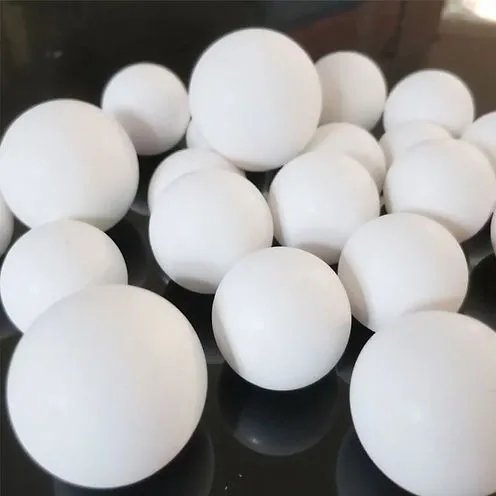
In Universities/ research labs and in industrial testing laboratories, grinding and milling are crucial processes. Media size, consistency and overall accuracy of the experiment may depend on the quality of the grinding media. Alumina Spheres are versatile and have proven to possess outstanding hardness, resistance to chemicals and wear. Alumina beads grinding media research-grade products are used in the laboratory for precise and repeatable results, and can carry out the material processing process to reduce contamination.
Why Grinding Media Matters in Research
Countless laboratory processes involve reduction to a fine powder for analysis, testing, or development of a manufacturing process. How efficiently this process occurs is a large part of what can be determined by the type of grinding media used inside mills.
Some material may cause the release of unwanted particles into the sample over time if the material is not sufficiently wear-resistant. This contamination may influence the results of research work, particularly in projects on advanced ceramics, pharmaceuticals, electronics or materials science. This risk is reduced by the use of Alumina Spheres, which retain their shape until the grinding cycle is repeated and hence do not wear too much.
High Hardness Supports Consistent Results
The main reason the laboratories prefer to use ceramic grinding media is their outstanding hardness. Alumina ceramics can withstand multiple impacts and friction without getting broken up rapidly.
Research-grade alumina beads grinding media are used to achieve a consistent grinding performance, while ensuring the purity of the processed materials. This is particularly useful when researchers need a particle size distribution to be reliable, or when they want to have very controlled experiments.
Also, ceramic grinding media last a long time. This helps you avoid buying new parts often, so your lab works well day after day.
Applications Across Research Facilities
Accuracy is required in all industries using ceramic grinding media, but their application varies according to the industry. Alumina Spheres can be used in normal experiments and in high-level research, where the quality of the samples is important.
Common applications include:
-
Material science research
-
Ceramic powder preparation
-
Chemical laboratories
-
Pharmaceutical development
-
Semiconductor research and development; electronics.
-
University research projects
For such environments, the grinding media have to be durable, chemically stable and preserve the integrity of the sensitive samples.
Chemical Stability Reduces Sample Contamination
Experiments can be conducted with materials that react to the air, or with special compounds that have to be handled with care. The grinding media should not contain any impurities and should not react with the processed material.
Alumina Spheres are used for many of the above reasons because they are resistant to corrosion and chemically stable in various laboratory settings. This property is helpful to maintain the sample purity and to enhance the reliability of analytical results.
For laboratories working with advanced materials, selecting alumina beads grinding media research grade products can support more reliable testing by limiting unwanted contamination during grinding operations.
Factors to Consider When Choosing Grinding Media
The selection of the grinding media should not be made based on the hardness of the media alone, but should depend on the specific requirements of the project. Some considerations should be taken into account by the researchers in making the decision.
The grinding performance is affected by the particle size requirements, type of mill, speed of the mill, and material to be ground. Also, the milling efficiency depends on the size of the Alumina Spheres, and it is important to select the appropriate grinding media for the desired use.
The purity, density and wear resistance of the material should also be considered, especially for scientific research or high-precision manufacturing projects, which require consistency of performance.
Supporting Long-Term Laboratory Efficiency
Quality grinding media is an important factor for quality research and efficiency operation. Laboratory ceramic materials are durable enough to minimize equipment downtime and maintenance time and ensure consistency of the processing conditions in various experiments.
Alumina spheres do not break down fast. These parts last. They do not wear out quickly, so busy labs can run daily tests without stopping. Their long lifespan cuts swap fees, so you save cash as months roll by.
Conclusion
For organizations and research facilities seeking in-depth knowledge and understanding of advanced ceramic materials suitable for high-demand scientific, and industrial applications, regmetals.com offers valuable information. Research-grade, high-quality alumina beads grinding media can be used to achieve high processing efficiency and can be used to preserve the quality of valuable research samples. It is important to seek advice from ceramic material specialists with experience handling laboratory equipment or material testing projects in order to determine what grinding solution best suits the needs.
