

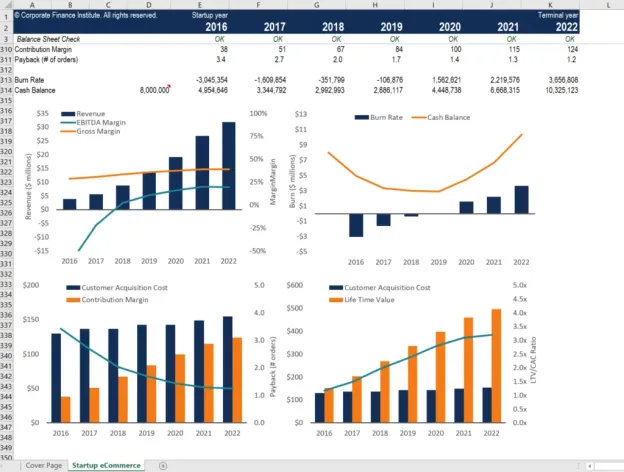
E-commerce businesses can grow quickly, but their value depends on more than sales volume or customer numbers. A 409A Valuation for E-commerce considers the fair market value of private-company common stock by examining financial performance, business prospects, market evidence, capital structure, and company-specific risks.
For an online business, customer retention, order economics, margins, competition, inventory requirements, and the ability to turn growth into sustainable cash flow can shape the valuation picture. Understanding these factors provides useful context for assessing common-stock value and selecting valuation approaches that reflect the company’s stage and circumstances.
Revenue Quality and Business Performance
Revenue is an important starting point, but its quality can provide deeper insight into an e-commerce company’s financial position. Analysts may examine sales growth, recurring or repeat purchases, customer concentration, pricing patterns, and the stability of different revenue streams.
Profitability also deserves close attention. Gross margins, operating expenses, fulfilment costs, marketing expenditure, and cash generation can show whether increasing sales are translating into stronger financial performance. A business growing rapidly while spending heavily to acquire customers may present a different valuation profile from one with more predictable margins and efficient operations.
Customer Economics and Operating Metrics
E-commerce businesses generate substantial operating data, making customer and transaction metrics useful for understanding performance. These indicators can help explain whether growth is sustainable and whether the company is building an economically viable customer base.
1. Customer Acquisition Cost
Customer acquisition cost can indicate how much a business spends to attract new buyers. Changes in acquisition costs can affect marketing efficiency and future profitability assumptions.
2. Customer Retention
Repeat purchases and retention patterns can provide insight into customer relationships. Strong retention may support more predictable revenue expectations, while weak retention can increase pressure on future acquisition spending.
3. Average Order Value
Average order value helps indicate the revenue generated from individual transactions. Changes can reflect pricing, product mix, promotions, or customer purchasing behavior.
4. Gross Margin
Gross margin shows the amount remaining after direct costs associated with products or services are considered. It can help reveal the economics of different product categories and sales channels.
5. Inventory Efficiency
Inventory management can influence working capital requirements, cash flow, and operating risk. Overstocking can tie up capital, while insufficient inventory can affect sales and customer satisfaction.
Growth Potential and Competitive Position
Future growth expectations can have a meaningful influence on private-company valuation. An e-commerce business may have opportunities to expand through new products, geographic markets, customer segments, sales channels, or improved technology.
However, projected growth should be supported by reasonable assumptions. Market size, competition, pricing power, customer demand, product differentiation, and operational capacity can all affect the credibility of forecasts. A valuation should distinguish between growth that is supported by business evidence and projections that depend heavily on uncertain assumptions.
Competitive position also matters. An established customer base, recognisable products, efficient distribution, proprietary technology, or differentiated offerings may influence the assessment of business risk and future prospects.
Cash Flow, Costs and Capital Requirements
E-commerce growth can require substantial spending before additional revenue translates into available cash. Inventory purchases, warehousing, fulfilment, technology, marketing, payment processing, staffing, and returns can affect cash requirements.
Financial projections therefore need to consider both revenue and the costs necessary to support that revenue. The income approach, including Discounted Cash Flow analysis, uses projected future cash flows and discounts them to present value. Relevant assumptions can include revenue growth, expenses, capital expenditures, working capital, and discount rates.
A business with strong revenue growth but significant working-capital requirements may have different valuation considerations from one generating more predictable cash flow from relatively efficient operations.
Market Evidence and Valuation Methodologies
External market evidence can provide another perspective on an e-commerce company’s value. Comparable public companies and relevant transactions may offer information about revenue multiples, earnings measures, industry expectations, and investor sentiment. However, meaningful differences in scale, growth, profitability, business model, and risk need to be considered.
Common valuation approaches include the Market Approach, Income Approach, and Asset Approach. Depending on the company’s circumstances, allocation methodologies such as the Option Pricing Method, Probability-Weighted Expected Return Method, or Hybrid Approach may be used to allocate enterprise value among different equity interests.
Capital Structure and Equity Considerations
An e-commerce company’s capitalisation table provides important information about ownership and securities. Common stock, preferred stock, options, warrants, and convertible securities may carry different rights and economic characteristics.
The price paid for preferred shares during a funding round should not automatically be treated as the fair market value of common stock. Preferred securities can include liquidation preferences and other rights that affect how equity value is distributed. A 409A analysis considers these differences when determining the value attributable to common stock.
For businesses exploring 409A valuations, complete capitalisation information and financing history can therefore be important inputs. Changes in ownership, new funding, or new securities may also affect the valuation analysis.
Key Risks Affecting E-Commerce Value
E-commerce businesses can face several operational and financial risks that may influence revenue forecasts, profitability expectations, cash flow, and overall valuation assumptions. These risks can vary depending on the company’s products, customer base, sales channels, supply arrangements, and stage of development.
● Customer concentration
● Rising customer acquisition costs
● Changing consumer demand
● Inventory and supply-chain risks
● Dependence on third-party platforms
These factors can influence the stability of future revenue and the costs required to maintain growth. Considering them alongside financial performance helps create a more balanced view of the company’s potential value and risk profile.
Conclusion
E-commerce company valuation brings together financial metrics, customer economics, growth expectations, market evidence, capital requirements, competitive conditions, and business risks. Looking at these elements collectively provides a more meaningful basis for assessing private-company common-stock value than relying on revenue or customer growth alone.
For companies seeking structured valuation support, Sharp 409A provides specialised 409A valuation services and detailed reports focused on the fair market value of private-company common stock. Businesses exploring startup company valuation can benefit from a professional process that connects financial information, market evidence, capital structure, and appropriate valuation methodologies.
