

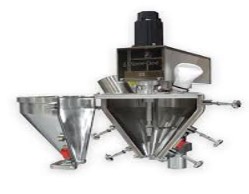
Accuracy in the filling of the products in a modern manufacturing industry has emerged as a necessity and not an option. Powder, spice, flour, and chemical industries are industries that heavily depend on the use of semi-automatic auger fillers to ensure consistency. The machines make businesses minimize manual errors and enhance the overall quality of production in a controlled environment.
How Semi-Automation Improves Production Control
Unlike fully manual systems, semi-automatic auger fillers offer a balanced approach between human control and machine precision. Operators can manage specific settings while the machine handles measurement and dispensing. This combination helps manufacturers maintain flexibility in production while still achieving reliable accuracy in every batch.
Efficiency in Medium-Scale Manufacturing
In small and medium production units, it may not always be feasible to invest in fully automated systems. Semi-automatic auger fillers are a good solution in these situations. They are affordable in terms of infrastructure and offer steady production, and they are viable in businesses with business activities that are slowly expanding.
The Role of Rotary Systems in High-Speed Production
As production demand increases, speed becomes just as important as accuracy. This is where rotary fillers play a major role. Designed for continuous operation, these machines handle high-volume production efficiently while maintaining uniform filling across all containers.
Consistency and Speed with Rotary Technology
Among the largest benefits of rotary fillers is the fact that they can continue to perform well at a high speed. They spin containers in various steps of filling and closing in a seamless process, and minimize the delays and maximize production without affecting the quality of the products. This renders them very useful in mass production setups.
Applications Across Different Industries
Semi-automatic auger fillers as well as rotary fillers find a wide application in various industries like food processing, pharmaceuticals, cosmetics and chemicals. Although semi-automatic systems are desired with flexible and smaller batches, rotary systems are suitable for large-scale continuous production, and they provide a wide variety of operational options to the manufacturer.
Conclusion
The appropriate combination of speed, accuracy, and flexibility is important in contemporary packaging and filling. Semi-automatic auger fillers are used to control and give smaller or expanding operations more precision, whereas rotary fillers are used in large-scale production lines to give them high speed. These technologies used together can assist industries to produce a consistent quality, less waste, and better productivity in a competitive manufacturing environment.
