

The Everest region is not one single landscape.
It changes as you move through it. Green hills give way to forests, forests open into wide valleys, and the higher trail becomes colder, rockier, and more exposed.
At the same time, your daily experience changes too.
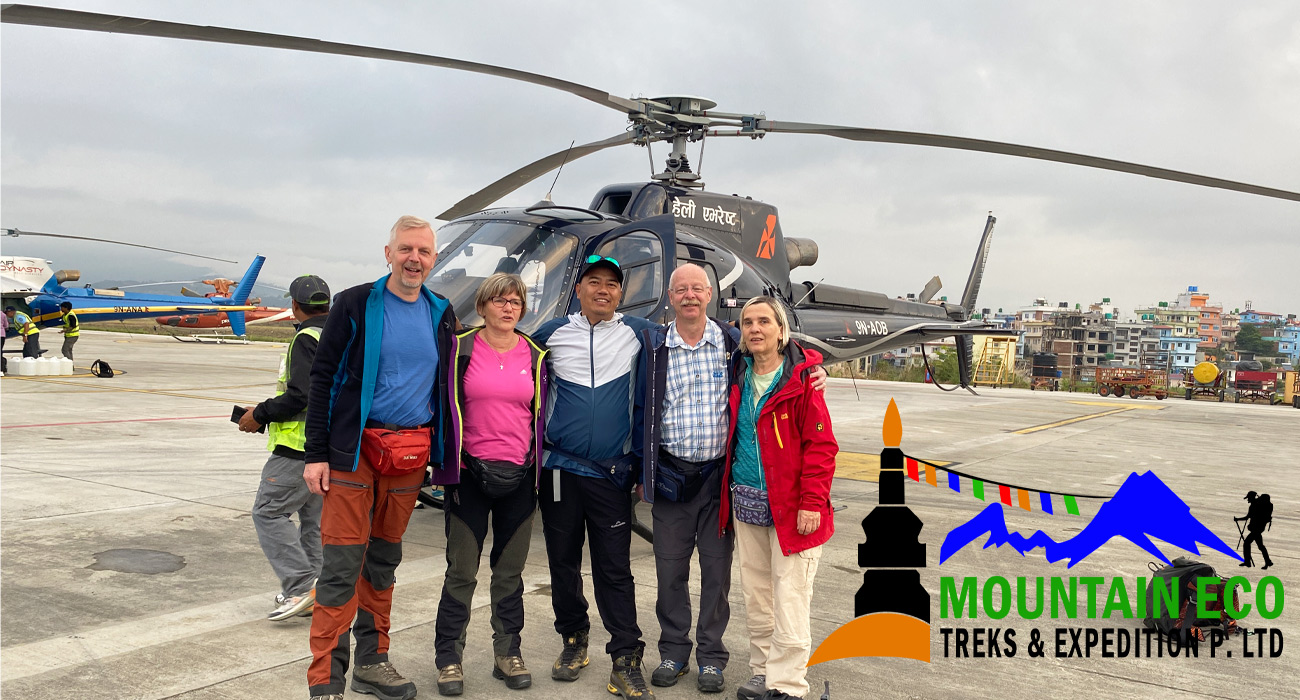
The Everest Base Camp Trek With Helicopter Return lets you experience these shifts on foot before giving you a completely different view from the air. You walk toward Everest Base Camp, spend time in the high Himalayas, and then return by helicopter when weather and operating conditions are suitable.
What makes this journey interesting is not simply the destination. It is the way everything around you changes along the route.
The Mountain Region Has Many Faces
It is easy to imagine the Everest area as a place covered entirely by snow.
That is not what the full trekking route looks like.
Lower areas can be surprisingly green, with trees, rivers, fields, and small settlements.
Your First Views May Surprise You
The early trail may feel more like a hill trek than a high Himalayan adventure.
That changes gradually.
As you continue upward, the air gets colder, vegetation becomes thinner, and the mountains begin to dominate the horizon.
You experience the transformation instead of seeing it all at once.
Forests Create a Different Kind of Trail
Walking through forested sections can feel peaceful.
Trees provide shade, birds add natural sounds, and the trail can feel protected from the open mountain weather.
Look Closely at the Trail
Forest sections are easy to rush through because the major mountain views may not always be visible.
But they have their own character.
Look at the trees, small plants, rocks, and streams around the path.
These quieter areas create a strong contrast with the exposed terrain waiting higher up.
Rivers Show the Shape of the Land
Water is an important part of the Himalayan landscape.
Rivers cut through valleys and continue flowing below the trekking route.
You may cross them using bridges or walk beside them for sections of the trail.
Listen Before You See
Sometimes the sound of rushing water reaches you first.
Then the valley opens and the river appears far below.
It is a simple experience, but it helps you understand how powerful natural forces have shaped the mountains over time.
Mountain Villages Have Their Own Rhythm
The villages along the route are not just places where trekkers stop for the night.
They are working communities.
People live, cook, trade, maintain homes, and move supplies in an environment where daily tasks can require much more effort than they do in cities.
Take a Slow Walk Through Town
If your schedule allows, spend a little time looking around.
Notice the stone walls, homes, prayer flags, shops, and small gathering areas.
You do not need to visit every building.
Simply observing local life can add depth to the journey.
The Trail Becomes More Open
As you climb higher, the forests begin to fade.
The landscape starts looking wider.
There are fewer trees to block the views, and huge mountain faces become easier to see.
Space Becomes Part of the Experience
You may look across a valley and see nothing but slopes, clouds, and distant peaks.
The sense of space can be overwhelming.
This is one of the biggest differences between walking in a crowded city and walking through the high Himalayas.
Your Body Notices the Difference Too
The changing landscape is not the only thing you experience.
Your body also responds to the increasing elevation.
Walking uphill may feel harder than expected, even when you are physically prepared.
Adjust Instead of Fighting It
Slow down when necessary.
Take suitable breaks.
Drink water regularly and follow your guide’s advice about acclimatization.
The goal is not to maintain the pace you had at lower elevations.
The goal is to keep moving safely.
Weather Can Rewrite the Landscape
The mountains can look completely different depending on the weather.
A sunny morning may reveal sharp peaks and deep blue skies.
Later, clouds can roll across the valley and hide much of the view.
Do Not Wait for a Perfect Day
If you expect perfect weather every day, you may spend too much time feeling disappointed.
Instead, enjoy what the mountain gives you.
Fog can create mystery.
Clouds can make the landscape feel dramatic.
Snow can transform a familiar trail into something completely new.
Higher Villages Feel More Remote
As you move farther upward, settlements can feel smaller and quieter.
The environment becomes harsher.
There are fewer trees, fewer comfortable options, and more exposure to cold and wind.
Notice How People Adapt
Mountain communities have developed ways to live in conditions that visitors may find difficult.
The buildings, clothing, food, and daily routines all reflect the environment.
Seeing these adaptations can give you a greater appreciation for the people who call the region home.
The Final Approach Requires Focus
The closer you get to Everest Base Camp, the more important pacing becomes.
You may be excited and want to move quickly.
That is exactly when patience matters.
Save Energy for the Whole Day
Do not spend all your energy during the first few hours.
Keep your pace comfortable.
Take photographs during suitable stops instead of constantly stopping and starting.
A calm approach can make the final section much more enjoyable.
Reaching Base Camp Connects Everything
Everest Base Camp is a major goal, but the experience of reaching it depends heavily on everything that came before.
The forests, villages, bridges, rivers, rocky valleys, and high mountain terrain have all prepared you for that moment.
Look Back Before Moving On
When you reach Base Camp, take time to think about the distance you have covered.
The landscape below is not just scenery.
You have walked through it.
That realization can make the destination feel much more personal.
The Return Changes From Ground to Sky
The Everest Base Camp Trek With Helicopter Return takes an unexpected turn after the walking portion.
Instead of following the trail back through the valleys, you can return by helicopter when conditions are suitable.
See the Same World From Above
The perspective changes immediately.
Paths become narrow lines.
Villages look tiny.
Rivers appear like threads between enormous mountain walls.
The helicopter shows you the scale of the region in a way that walking never can.
The Journey Shows How Much Can Change
The Everest Base Camp Trek With Helicopter Return is interesting because the experience evolves from beginning to end.
You start among greener landscapes.
You continue through forests and mountain villages.
You move into wider and colder valleys.
The vegetation becomes sparse.
The peaks become larger.
Then you reach Base Camp and leave the trail by helicopter.
The entire journey feels like a gradual transition from one world into another.
A Journey Defined by Change
The Everest Base Camp Trek With Helicopter Return is not simply about reaching Everest and getting back.
It is about experiencing the many versions of the Himalayan landscape along the way.
You see how forests become open valleys, how villages adapt to altitude, how weather changes the appearance of mountains, and how your own walking rhythm changes as you climb.
Then the helicopter gives you one final surprise: the same landscape you experienced slowly now passes beneath you from above.
That is what makes the journey memorable.
You do not just visit the Everest region.
You watch it change around you, one day and one elevation at a time.
Frequently Asked Questions
Does the landscape stay the same throughout the trek?
No. The route passes through different elevations, so vegetation, weather, terrain, and mountain views change considerably.
Why does the landscape become less green at higher elevations?
Colder temperatures, thinner air, and harsher conditions limit the amount of vegetation that can grow.
Is altitude the only challenge on the trek?
No. Long walking days, uneven terrain, cold temperatures, changing weather, and the need for proper pacing can also make the journey demanding.
What does the helicopter add to the trip?
It provides a much faster return and lets you view valleys, trails, villages, and mountains from a completely different perspective.
Can the helicopter schedule change?
Yes. Weather and safety conditions can affect flights, so keeping some flexibility in your travel plans is important.
